Category: Uncategorized

  • Is Your Website Accessible, or Is It Just Pretty?

    Is Your Website Accessible, or Is It Just Pretty?

    A gorgeous website is great. A gorgeous website that half your customers can’t use? Not so much.

    Website accessibility is about making sure everyone can navigate, understand and interact with your website, regardless of their abilities or the technology they use.

    And no, it’s not just about adding a few alt tags and calling it a day.

    5 things your website should be getting right

    1. Headings that make sense

    Give your content some structure. Screen readers use headings to help people navigate your pages. Randomly jumping from H1 to H4? Let’s not.

    2. Images with alt text

    Images need descriptions so people using screen readers aren’t left wondering what they’re missing. A picture might be worth a thousand words, but only if people can access them.

    3. Colour contrast

    Pale beige text on a white background might look aesthetic, but it’s not doing anyone’s eyesight any favours.

    4. Keyboard navigation

    Not everyone uses a mouse. Your website should allow people to navigate links, buttons and forms using just a keyboard.

    5. Forms that actually make sense

    Labels should clearly identify what information is required. Nobody should need a guessing game to contact your business.

    Why should small businesses care?

    Because your website should be welcoming to everyone, not just people who can see, hear and navigate it exactly as you do.

    Accessible web design can improve usability, reach more potential customers and create a better experience for everyone.

    Give your website a little accessibility check

    Try navigating without your mouse, zooming in, turning off your stylesheets or using a screen reader.

    You might discover a few things hiding behind that pretty design.

    At Wild Pixels, we believe websites should look good AND work well. Because good design shouldn’t leave anyone out.

    Need a website that ticks both boxes? Get in touch with Wild Pixels.
  • Google Who? Relax, We’re Not Breaking Up.

    Google Who? Relax, We’re Not Breaking Up.

    Remember when getting your business noticed online meant trying to impress Google? Good news: Google isn’t going anywhere. But there’s a new player joining the party.

    People are increasingly asking AI tools like ChatGPT, Gemini and Copilot for recommendations, advice and answers.

    Instead of typing “web designer Perth” into Google, someone might simply ask ChatGPT, “Who can build me a decent website without charging me the price of a small yacht?”

    And that’s where GEO comes in.

    What the heck is GEO?

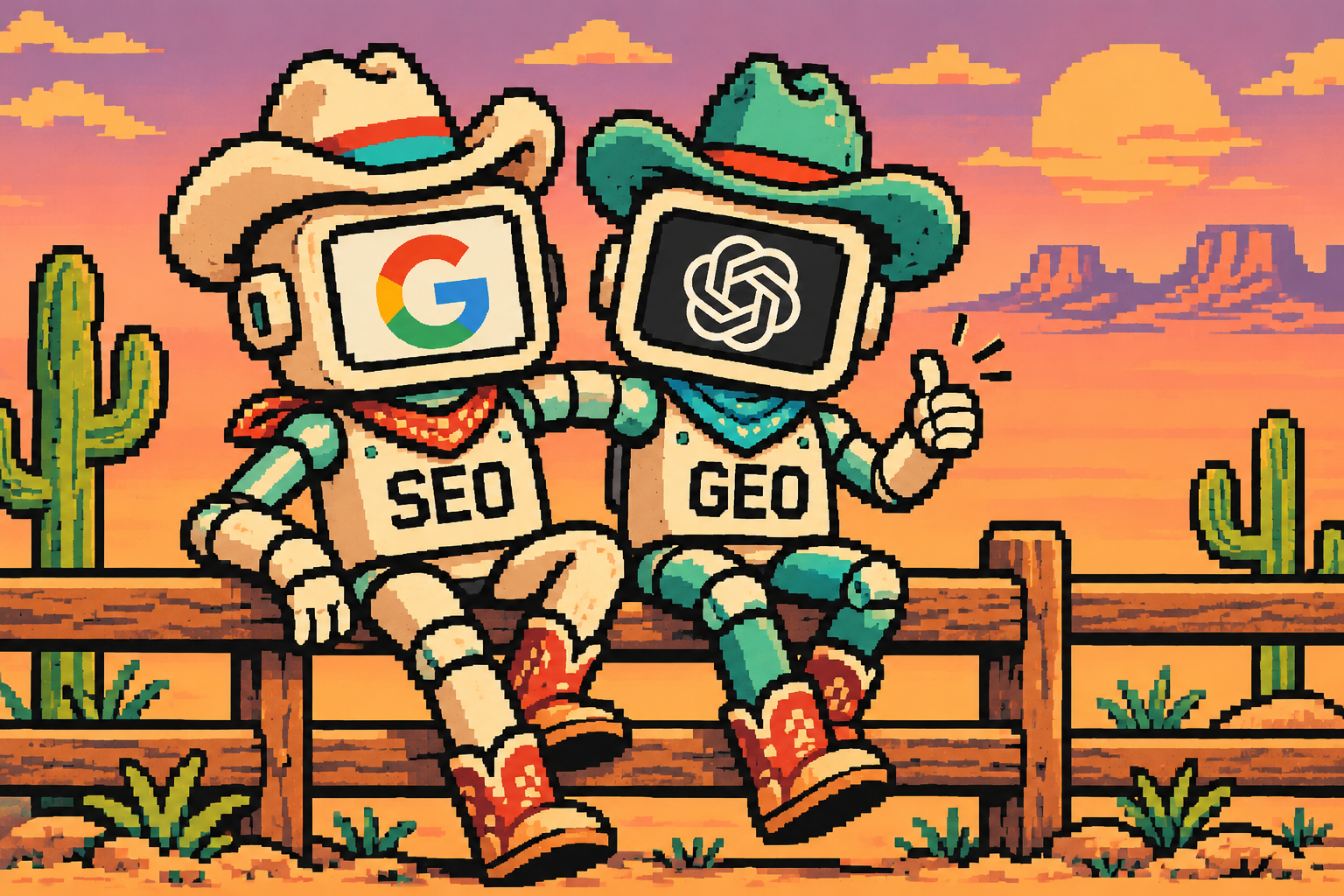
    GEO stands for Generative Engine Optimisation. It’s about making your business and website easier for AI-powered tools to understand, so you have a better chance of appearing in relevant recommendations.

    Think of it as another way for people to find you. Not a replacement for Google, not a reason to throw your SEO strategy out the window, and definitely not a reason to panic-buy an AI course.

    SEO or GEO? Why not both?

    SEO and GEO can work together. They’re just different ways of helping people discover your business.

    The good news? A lot of the things that make your website good for SEO can also help AI understand your business.

    Here’s where to start:

    • Be clear about what you do. “Making dreams happen” sounds lovely, but explaining exactly what you offer is much more useful.
    • Answer actual questions. Create helpful content that addresses the things your customers want to know. No need to write an essay about the history of the internet.
    • Build your credibility. Genuine reviews, relevant business listings and mentions elsewhere online help establish your presence.
    • Keep your website in good shape. Clear headings, useful content, sensible navigation and structured data all help make information easier to understand.
    • Keep showing up. Update your website and keep creating content that’s actually worth reading.

    So, what’s the takeaway?

    You don’t need to choose between SEO and GEO. You don’t need to abandon Google, reinvent your entire marketing strategy or start speaking fluent robot.

    Search is evolving, and there are simply more ways for customers to discover your business.

    Some will Google you. Some will ask AI. Others will still take recommendations from their neighbour who knows a bloke.

    The goal? Make sure your business is easy to find, wherever people are looking.

    Wild Pixels — helping small businesses get noticed online, whether they’re searching, scrolling or asking the robots.

  • 5 Website Mistakes That Could Be Costing Your Small Business Customers

    5 Website Mistakes That Could Be Costing Your Small Business Customers

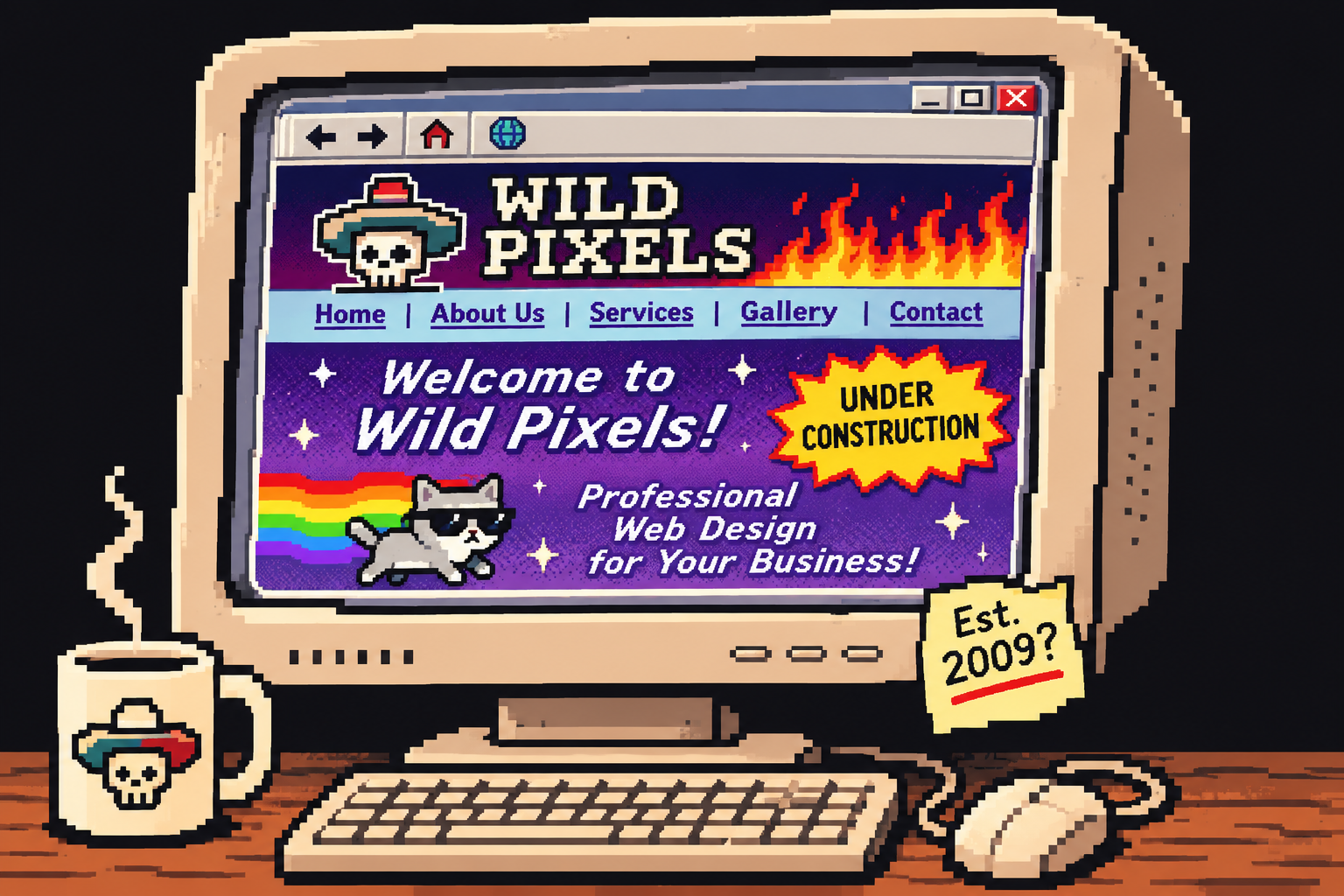
    Your website is your digital shopfront. So, if it’s looking a little neglected, confusing or like it hasn’t seen a design update since 2009, we might need to have a chat.

    You wouldn’t leave your physical shop with the lights off, the door locked and a handwritten sign saying “good luck finding us”. So why let your website do the digital equivalent?

    Your website should be helping customers find you, understand what you offer and, most importantly, get in touch. Here are five common website design mistakes that could be sending potential customers running.

    1. Your website looks terrible on mobile

    It’s 2026. People are browsing on their phones. They’re not pulling out a desktop computer and settling in with a cup of tea just to find your opening hours.

    If your website requires customers to pinch, zoom, scroll sideways and perform a small gymnastics routine just to read your services, it’s probably time for an update.

    Responsive web design makes sure your website looks great and works properly across phones, tablets and desktops.

    2. Nobody knows what you actually do

    Welcome to your website! We’re not entirely sure what we do either, but thanks for visiting.

    Your homepage should tell visitors who you are, what you offer and who you help. Don’t make people play detective to figure out whether you’re a plumber, a photographer or selling artisanal candles.

    Keep your messaging clear and put your most important information front and centre.

    3. Your contact details are hiding like they’re in witness protection

    You’ve convinced someone to use your services. Fantastic! Except they can’t find your phone number, email address or contact form.

    Don’t make potential customers work for it.

    Make your contact details easy to find and include clear calls to action like “Get a Quote” or “Get in Touch”.

    The fewer clicks between a visitor and an enquiry, the better.

    4. Your website takes approximately three business days to load

    We’ve all been there. You click on a website, stare at a loading screen for a few seconds and suddenly decide that whatever you were looking for probably wasn’t that important anyway.

    Slow websites can frustrate visitors and encourage them to leave.

    Large, unoptimised images and unnecessary website features can affect loading times. Keeping your website lightweight and optimised helps create a much better experience.

    5. Your website is giving 2009 energy

    There’s nothing wrong with nostalgia. Your website, however, probably shouldn’t look like a time capsule.

    Tiny text, clashing colours, outdated layouts and stock photos of people shaking hands enthusiastically in boardrooms aren’t exactly inspiring confidence.

    Your website should reflect your current business, your branding and the quality of the services you provide.

    A fresh, professional design can make a much better first impression.

    Your website deserves better. So does your business.

    You work hard to run your business. Your website should be working hard too.

    At Wild Pixels, we create custom, affordable websites for small businesses and sole traders in Perth. No unnecessary bells and whistles, no confusing jargon, just websites that look good, work properly and help your business put its best foot forward.

    Ready to give your website a glow-up? Let’s talk.

    Wild Pixels – Custom Web Design for Small Businesses in Perth.

  • Are Customers Clicking Search Results or Asking AI?

    Are Customers Clicking Search Results or Asking AI?

    The way people search for businesses is changing. Instead of scrolling through Google results, customers are increasingly asking AI tools like ChatGPT and Google’s AI Overviews for recommendations.

    For example, someone looking for a web designer might ask, “Who offers affordable web design for small businesses in Perth?” AI can provide suggestions and summaries without the customer needing to visit multiple websites.

    What Does This Mean for Small Businesses?

    AI-generated answers can reduce clicks to traditional search results, even when websites appear in searches. This is sometimes called a zero-click search, where users find the information they need without visiting a website.

    However, customers who are ready to compare services or make a purchase may still click through to learn more.

    Small businesses can adapt by creating helpful content, maintaining accurate business information, collecting customer reviews and building a website that clearly explains their services.

    Is SEO Still Important?

    Absolutely. A strong SEO strategy helps businesses remain discoverable through traditional search and supports their wider online presence.

    The focus should be on more than just rankings and clicks. Useful content, credibility and a well-designed website can help turn online visibility into genuine enquiries.

    At Wild Pixels, we help small businesses build websites that look great, communicate their value and make it easier for customers to take the next step.

    Explore Wild Pixels’ custom web design packages for small businesses and take the next step towards building your online presence.

  • Affordable Website Packages for Small Businesses in Perth: What Do You Actually Need?

    Affordable Website Packages for Small Businesses in Perth: What Do You Actually Need?

    Running a small business isn’t cheap. Between supplies, bills and the coffee keeping you functional, your budget is already doing enough heavy lifting.

    So when it’s time to get a website, the last thing you need is a quote that makes you question all your life choices.

    The good news? You don’t need to sell a kidney to get a professional website. Here’s what to consider when planning your small business website.

    1. Figure Out What You Actually Need

    Do you want to showcase your services, display a portfolio or generate customer enquiries?

    A local tradie might need a homepage, services page and contact form, while a photographer might need a gallery to show off their work.

    Start with the essentials. You don’t need seventeen bells and whistles if all you need is somewhere for customers to find you.

    2. Get the Essentials Right

    A website needs to do more than look pretty. Although, looking pretty doesn’t hurt.

    Make sure your website has:

    • Mobile-friendly design: Nobody wants to pinch, zoom and rage-quit just to find your phone number.
    • Easy navigation: Visitors shouldn’t need a treasure map to find your services.
    • Clear contact details: Make it easy for customers to get in touch.
    • SEO foundations: Relevant headings, page titles and useful content help search engines understand your website.
    • Fast loading speeds: Impatient visitors won’t wait forever for your page to load.

    3. Watch Out for Hidden Costs

    Your initial website quote might not include everything. Hosting, domain registration, maintenance and future updates can all add to the cost.

    It’s a bit like buying a car and discovering the steering wheel costs extra.

    Ask what’s included before committing, so you know exactly what you’re paying for.

    4. Don’t Forget About SEO

    You’ve built a website. Great! Now, how are people supposed to find it?

    Search engine optimisation (SEO) helps search engines understand your content and can improve your visibility in search results. Relevant keywords, useful content and a well-structured website are a good place to start.

    Just don’t expect to publish your website on Monday and become Google’s favourite by Tuesday. SEO takes time.

    Ready to Get Your Business Online?

    You started your business to do what you’re good at, not to spend every evening fighting with website layouts.

    At Wild Pixels, the focus is on affordable web design and development services for small businesses and sole traders in Perth. The goal is to help you build a professional online presence without making your bank account cry.

    Professional website. Sensible budget. Fewer headaches. Sounds pretty good, doesn’t it?

  • Your Website Called. It Wants a Custom Design.

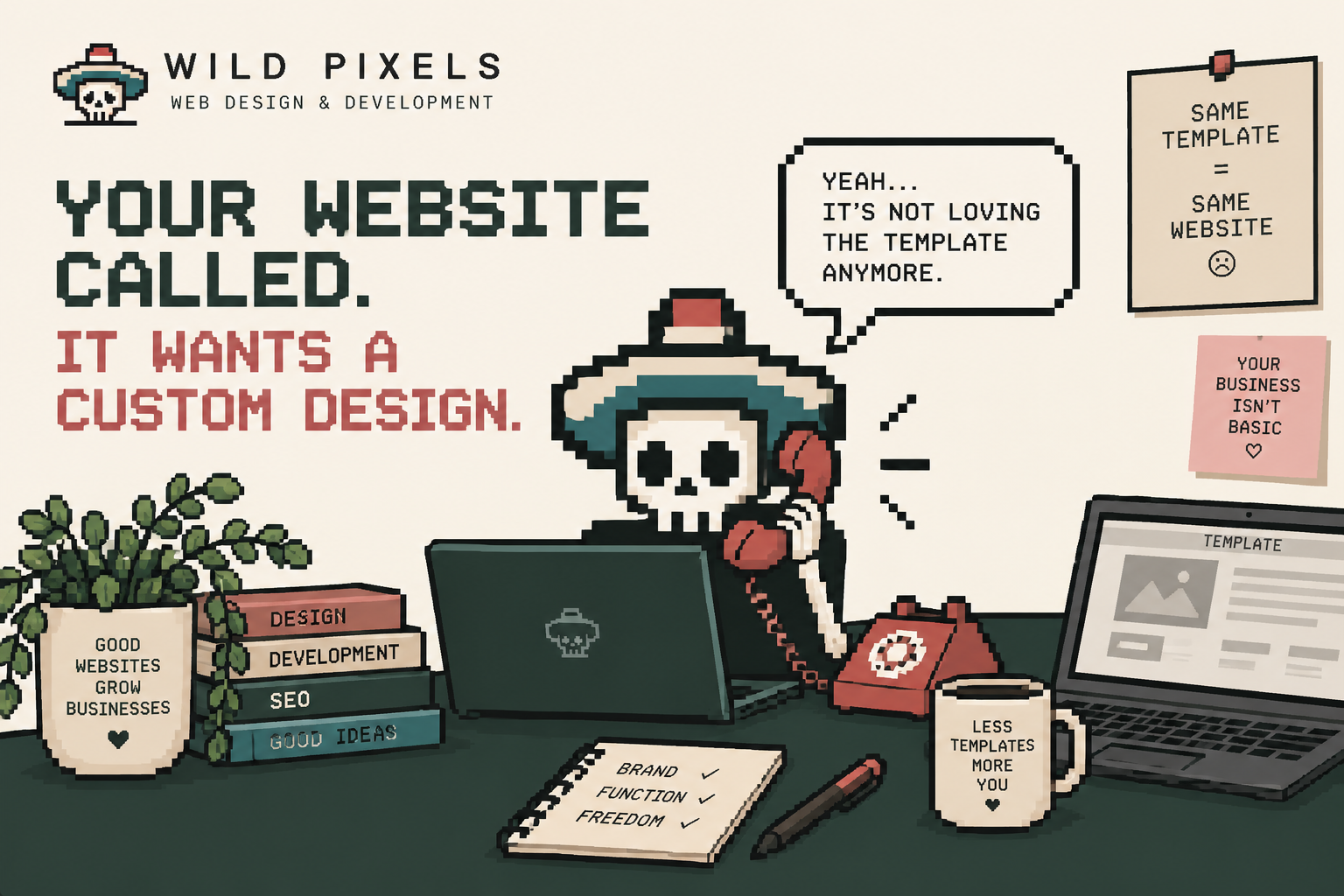
    Your Website Called. It Wants a Custom Design.

    Your Business Isn’t a Template. So Why Is Your Website?

    Let’s be honest. Templates are pretty handy.

    You pick one, change the colours, swap out the stock photos, add your logo and suddenly you’ve got a website. Job done, right?

    Well… sort of.

    The problem starts when your business doesn’t quite fit the template.

    You move things around. You delete sections you don’t need. You try to squeeze in the information you actually want to show. Then you realise the button you want is only available on the “Premium Pro Business Plus Super Deluxe” plan.

    Suddenly that $15-a-month website isn’t looking quite so simple.

    Your business has its own personality

    Your website should reflect that.

    A template has already made a lot of decisions for you — where your content goes, how your pages are structured and what your website is supposed to look like.

    A custom website starts with you.

    What do you offer? Who are your customers? What do you want people to do when they land on your site?

    Those answers can shape the design instead of trying to squeeze them into a predetermined layout.

    Pretty isn’t the whole point

    A website can look fantastic and still be frustrating to use.

    If your customers can’t find your contact details, your buttons don’t make sense on mobile or your pages take forever to load, it doesn’t matter how nice the homepage looks.

    A web developer can consider things like:

    • Responsive design
    • Website performance
    • Accessibility
    • Navigation
    • SEO
    • Page structure
    • User experience

    Because a good website shouldn’t just look good.

    It should actually work.

    What happens when you change your mind?

    Because you will.

    Maybe you add a new service. Maybe you start selling something. Maybe you want a blog. Maybe your business grows and suddenly the website you built two years ago doesn’t really fit anymore.

    With a custom website, there’s room to build and change things as your business evolves.

    You’re not stuck asking:

    “Can this template do that?”

    You’re asking:

    “How can we make this work?”

    Much better question.

    But aren’t templates cheaper?

    Sometimes, yes.

    And if you need a very simple website and you’re happy to build and maintain it yourself, a template can be a perfectly reasonable option.

    But your website is often the first impression someone gets of your business.

    If you’re investing time and money into building a business, it makes sense to have a website that represents it properly.

    Your business isn’t trying to be everyone else

    So why should your website?

    A custom website gives you the freedom to create something that actually feels like your business — rather than changing your business to fit whatever template you happened to choose.

    Because there are already enough identical websites on the internet.

    Let’s make yours a little more you.

  • So… Do We Still Need Coders?

    AI can write code now.

    Which is great news if you hate writing code, and slightly terrifying news if your entire job involves writing code.

    Tools like ChatGPT can generate HTML, CSS, JavaScript and even help fix those annoying errors that somehow appear after you changed one tiny thing.

    So, is coding becoming obsolete?

    Not quite.

    AI can write code. But can it think like a developer?

    AI can give you code, but it doesn’t necessarily understand what your website actually needs.

    You still need to know:

    • What the code is doing
    • Where it belongs
    • Whether it actually works
    • Whether it’s secure
    • And why the hell it just broke everything

    That’s where knowing how to code still matters.

    The good news

    AI can take care of some of the boring stuff.

    Need a starting point for a function? Ask AI.

    Can’t figure out why something isn’t working? Ask AI.

    Need to spend 45 minutes trying to remember why you forgot a semicolon? Maybe don’t do that one.

    Used properly, AI can save developers a lot of time.

    The catch

    There’s a difference between using AI to help you code and having AI code everything for you.

    If you copy and paste everything AI gives you without understanding it, you’re going to have a bad time when something breaks.

    And something will break.

    Learning to code means learning how to solve problems, experiment, make mistakes and figure out why something isn’t working. Those skills are still valuable, even when AI is sitting beside you offering suspiciously confident answers.

    So, are coders doomed?

    Probably not.

    AI is changing coding, but I don’t think it’s killing it.

    The developers of the future might simply spend less time typing every line of code and more time thinking about what the code should actually do.

    AI can be another tool in the toolbox.

    Just don’t hand it the toolbox and walk away.